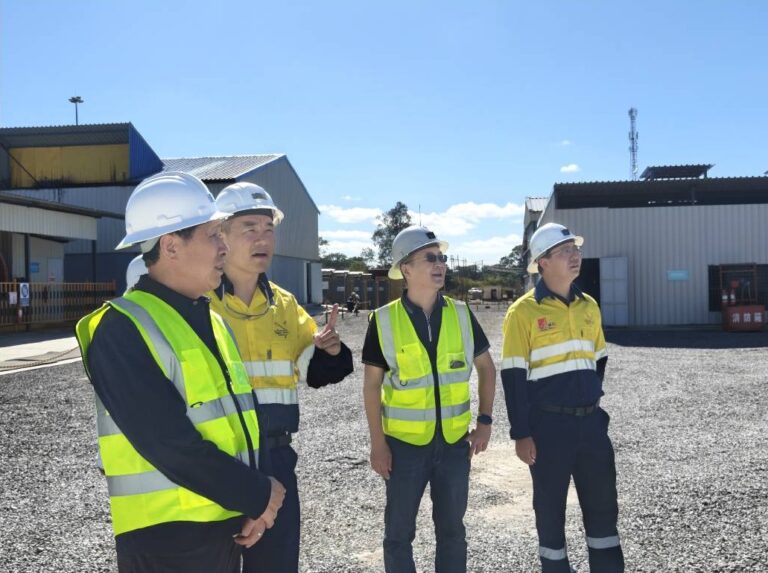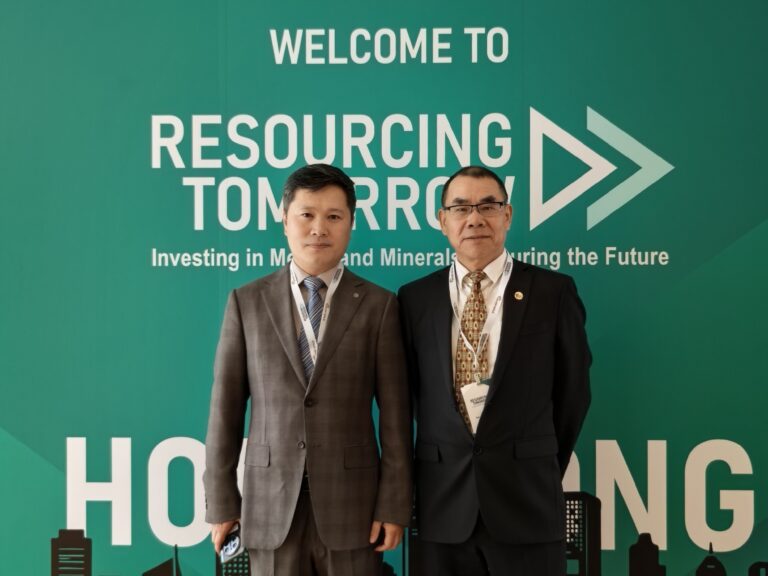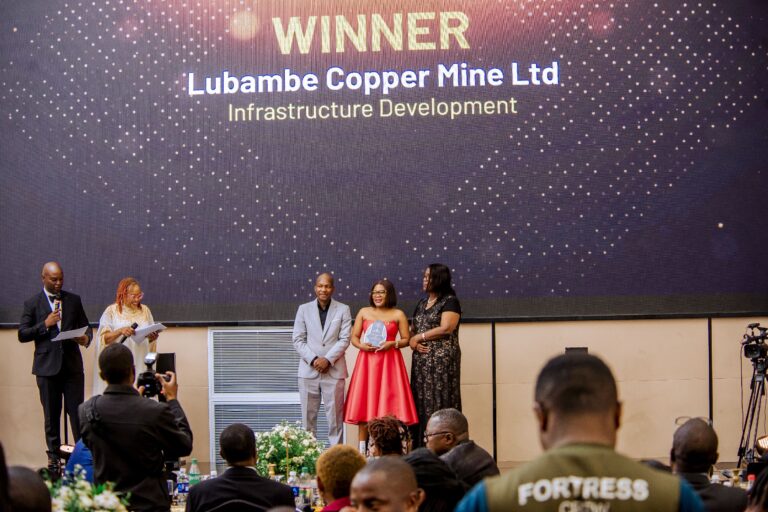
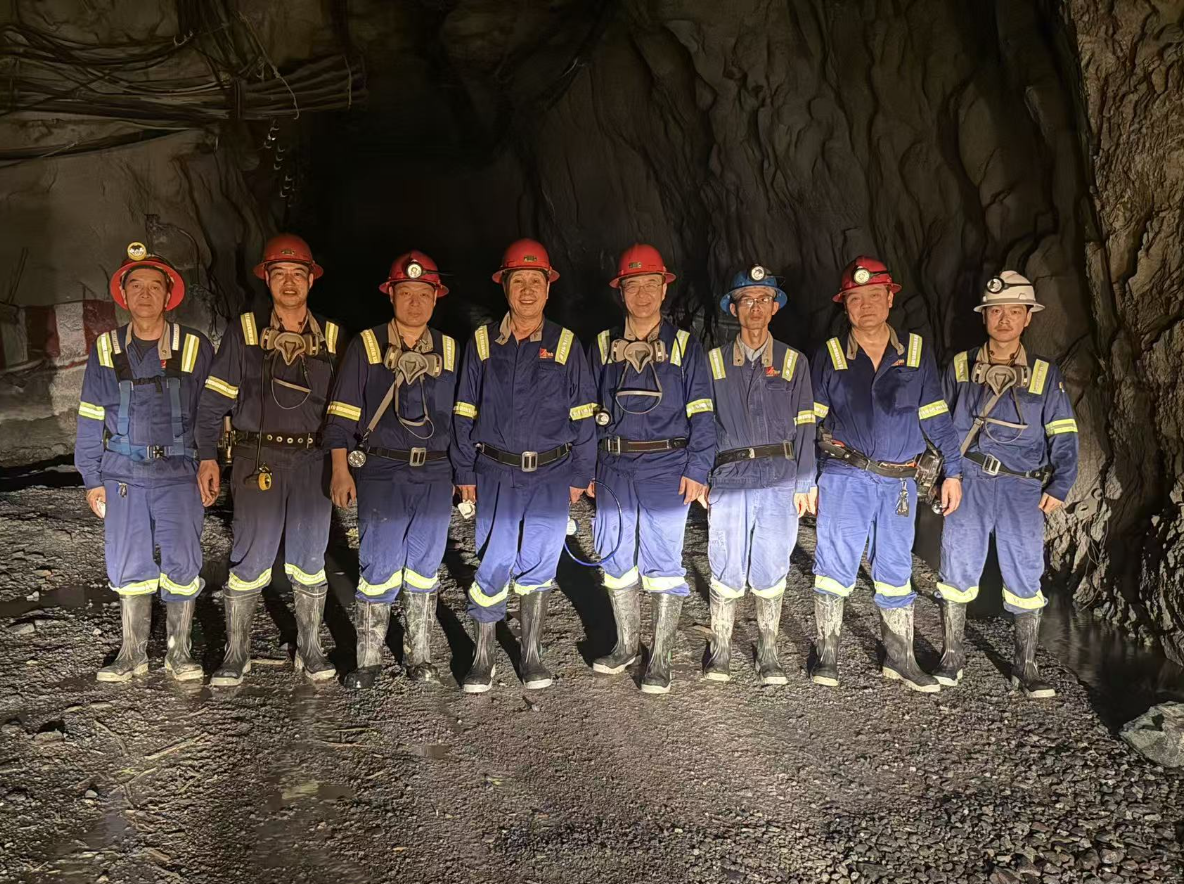
From 20th September to 14th October, Mr. Wang Xiancheng, Chairman of JCHX Group, embarked on an extensive inspection and guidance tour of the mining service projects and JCHX’s own operations across Africa. During his visit, Chairman Wang went to the front lines to conduct a comprehensive review of operational performance. His agenda focused on critical areas including workplace safety, project construction progress, cost control mechanisms, the development of local talents, and the advancement of localized management.
At underground production areas of the Lubambe Copper Mine, Wang Xiancheng inspected a range of critical operational aspects, including the coordination of production activities, progress on key construction projects, equipment maintenance, and the implementation of SOPs on safe production. He also received detailed briefings on the development of key mining faces, equipment performance, roof support, and water control tasks. He emphasized, "the complex underground environment necessitates strict adherence to all safety procedures and protective measures. Ensuring the safety of our employees and the stable operation of the project is our paramount and non-negotiable priority."
During a management symposium, Wang Xiancheng called for scientifically strategic planning for the mine's development, emphasizing a long-term vision. He stipulated that the infrastructure and construction of the Lubambe Copper Mine must be grounded in practical reality, with a systematic design and comprehensive consideration. He instructed the Lubambe management to heighten their focus on key operational cost areas, particularly major expenditures such as power consumption. He urged them to conduct in-depth analysis and actively explore practical cost-control and optimization measures. This shift towards refined management, he stated, is essential to enhance profitability. Furthermore, Chairman Wang emphasized building a Sino-Zambian talent development system to improve localized management capabilities. The goal is to forge a world-class team that is technically proficient, managerially efficient, and integrated in its development. He also directed the team to leverage existing advantages and fully harness the pivotal role of the digital management system, ensuring that the digital management systems are both efficient and practical, thereby providing robust support for the comprehensive upgrade of mine management.
At Lonshi Copper Mine, Wang Xiancheng visited key operational sites to inquire about progress, including underground production faces, drainage facilities, processing plant, smelter, tailings dam, and shaft. During his inspections at specific locations, such as production faces, 1060mL pump house, power distribution room, North Pit, and main/auxiliary and southern air-return shafts, he commended the team on their efforts in safety, housekeeping, and SOPs. While acknowledging the progress, he reminded everyone that strict adherence to SOPs is mandatory in every task, emphasizing that safety responsibilities must be firmly embedded in every role and every operational step.
Also at Lonshi Copper Mine, when inspecting the ball mill, SAG mill, and flotation sections at the concentrator, as well as the electrowinning workshop at the smelter, Wang Xiancheng commended the team on their significant achievements. He specifically acknowledged the success in process optimization, the successful commissioning and output increase of concentrator, and high-quality, stable production of copper products in the electrowinning workshop. He encouraged everyone to build on this momentum and persevere in their efforts to ensure that production targets, key projects, and critical tasks all advance in tandem.
At Dikulushi Copper Mine, Wang Xiancheng visited a lower-hand cut-and-fill stope to gain a detailed understanding of backfill quality, the rock structure of the stope walls, and the ore body's strike and grade. He meticulously inquired into the technical specifications for cemented backfilling and steel arch support. He emphasized that the steel sets and backfilling must achieve proper contact with the roof, with their spacing strictly controlled to ensure effective ground support. He also instructed the team to enhance technical measures to strengthen the support of surrounding rock to the filling body, thereby guaranteeing the safety and stability of the mining drifts. At the intersection connecting the air return shaft with the 5-1 level drift, he conducted a careful inspection of the ladderway installation, reviewed its design dimensions, and stressed priority on ensuring construction safety and installation quality.
At the 7-1 level, Wang Xiancheng conducted a detailed review of the construction progress for key infrastructures, including the pump house, power distribution room, water distribution tunnels, and suction sumps. His inspection then extended to critical surface facilities such as the open-pit waste pile, surface tailings dam, backfill plant, and the concentrator’s flotation, dewatering sections, and concentrate storage building. At these sites, he inquired about waste disposal practices, the operational status of Tailings Pond 3, and the processes of concentrate filtration, dewatering, and stockpiling.
Deep-level exploration is one of the key tasks for Dikulushi this year and is crucial to unlocking resource growth in the coming years. Wang Xiancheng expressed his expectation for the company to fully capitalize on the expertise and experience of JCHX's geological and exploration specialists. He urged a thorough review of past exploration campaigns to drive efforts toward achieving fresh breakthroughs and significant progress.
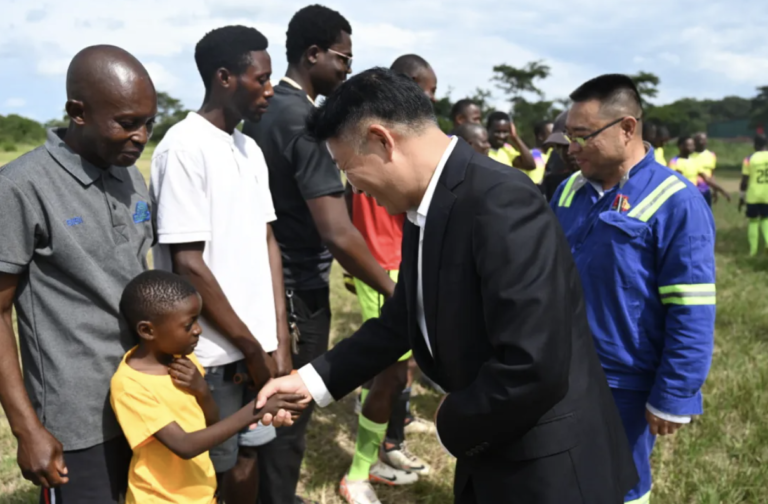
Regarding the enhancement of localized management, Wang Xiancheng mandated the strict execution of all-inclusive safety training programs, with a focus on significantly improving their quality and effectiveness. He emphasized that local employees are an integral component of the JCHX family and a valuable asset, whose training and development must be prioritized to elevate the technical and managerial capabilities of local key personnel. Furthermore, he urged an accelerated pace for CSR works, emphasizing the need to improve their quality and impact to contribute substantively to the harmonious socio-economic development of the local communities.
At the underground working faces of Khoemacau project in Botswana, Wang Xiancheng conducted an on-site assessment of the implementation of construction SOPs. He inquired in detail into the application parameters and quality control standards for fibercrete spraying and mesh anchoring support technologies. Emphasizing that support quality is the paramount and first line of defense for underground safety, he insisted that compliance with specifications must be achieved with millimeter-level precision.
The application of intelligent and automated mining equipment is a core strength of Khoemacau Project and key to accelerating production and enhancing efficiency. Wang Xiancheng pointed out that “Automated systems are the linchpin for boosting the competitiveness of our overseas projects. We must achieve seamless man-machine collaboration to further unlock their potential, while simultaneously establishing a comprehensive training system that covers all facets: operation, maintenance, and emergency response procedures."
At Kinsenda Project, Wang Xiancheng engaged with the client's management team to discuss site safety performance and strategies for enhancing project quality and efficiency, aiming to further strengthen bilateral cooperation. Subsequently, at Kamoa Project, he conducted an extensive tour of zones 105, 102, and 101 in the northern production area. Throughout the inspection, he diligently reviewed measures for safety and site management, underscoring the necessity of leveraging SOPs to elevate overall project safety. He emphasized that intensified patrols of key areas and rigorous equipment maintenance are essential to ensure the safe, orderly, and efficient execution of all work.
At Musonoi Project, Wang Xiancheng attentively listened to the progress report on key tasks and expressed his expectation for the project to benchmark against international standards. He urged the team to strive for excellence, build a high-quality project, ensure progress through scientific coordination, and integrate the "craftsman spirit" deeply into the entire process of technical innovation, management efficiency, and service excellence. Subsequently, at Kipushi Project, he held an in-depth exchange with the client's management on engineering tasks and production plans for 2026, while addressing key technical issues such as underground backfilling.
Throughout the visits, Wang Xiancheng underscored the necessity to persistently advance the development of internationalized and localized teams. The objective is to forge a highly effective and localized work force characterized by cultural integration and seamless collaboration, thereby solidifying the talent foundation for the continuous enhancement of global operations.